






10 common fabric finishing techniques
After finishing is give fabric with color effect, form effect (smooth, suede, crisp, etc.) and actual effect (permeable, felt, no hot, no moth, combustion resistance, etc.) technology treatment, fabric finishing is through the chemical or physical method to improve the appearance and feel, improve performance or give special function of the process, is the textile "icing on the cake" processing process.
The finishing method can be divided into two categories: physical and mechanical finishing and chemical finishing. According to the purpose of the finishing and the different effects, it can be divided into basic finishing, appearance finishing and functional finishing.
The purpose of post-finishing
1.Make the textile width neat and uniform, stable in size and shape. Such as fixed (pull) amplitude, mechanical or chemical shrinkage, wrinkle and heat setting, etc.
2.Improve the appearance of textiles: including improving the luster and whiteness of textiles, and enhancing or weakening the surface fluff of textiles. Such as whitening, rolling light, optical, Asian, hair, scissors and shrinkage.
3.Improve the textile hand feel: chemical or mechanical methods are mainly used to make the textile get a comprehensive touch feeling such as soft, smooth, plump, stiff, thin or thick. Such as soft, stiff, weight gain, etc.
4.Improve the durable performance of textiles: chemical methods are mainly used to prevent the damage or erosion of fibers by sunlight, atmosphere or microorganisms, and prolong the service life of textiles. Such as moth-proof, mildew-proof finishing, etc.
5.Giving special properties to textiles: including making textiles have certain protective properties or other special functions. Such as flame retardant, antibacterial, water, oil, ultraviolet and anti-static.
The development of fabric finishing technology is developing towards the direction of functional, differentiation, high-grade, diversification and depth of processing technology, and emphasizes improving the performance of products and increasing the added value of products. In recent years, various new technologies from other technical fields (such as low-temperature plasma processing, bioengineering, ultrasonic technology, electron beam radiation treatment, inkjet printing technology, microcapsule technology, nanotechnology, etc.) have been continuously introduced from other technical fields, so as to improve the depth of processing and obtain good finishing products. With human attention to environmental pollution and damage, more and more attention to health, advocate "low carbon" economy, finishing technology requires environmental protection "green" processing, the production of "clean", "low carbon" textile products.
The basic finishing methods of fabrics include: stabilizing the size, improving the appearance of the finishing method, improving the feel and optimizing the performance, making the multifunctional, high value-added fabric, making the advanced fabric, the finishing method to meet the special requirements.
Various finishing processes are as follows:
1 Pre-shrink
Pre-shrinkage is a physical process to reduce the shrinkage of the fabric to reduce the shrinkage rate. Mechanical pre-shrinkage is to wet the fabric by spray or spray, and then apply to the mechanical extrusion, so that the flexion wave height increases, and then by loose drying.
2 Pull
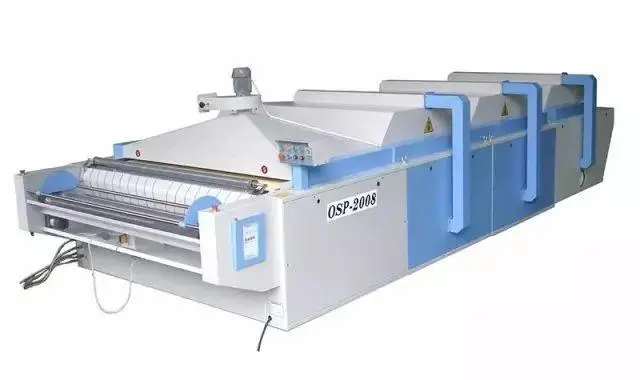
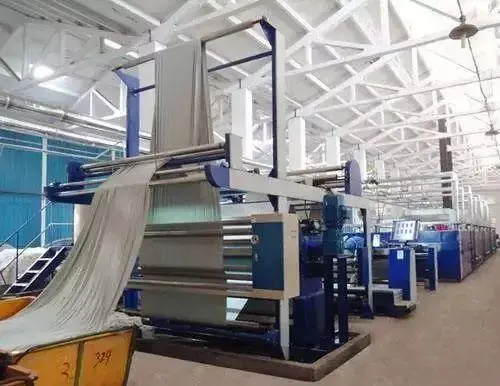
Pull amplitude is the use of cellulose, silk, wool and other fibers in wet conditions have the plasticity, the fabric width gradually widened to the specified size for drying, so that the fabric shape can be stable process, also known as fixed amplitude finishing.
3 On the pulp
Pulping refers to the finishing process of soaking the fabric and drying to get thick and stiff effect.
4 Hot finalize the design
Thermal setting is a process that makes the shape of thermoplastic fiber and blended or interweaving materials relatively stable. It is mainly used for the processing of nylon or polyester and other synthetic fibers which are easy to shrink and deform after heat. After hot setting of the fabric, can improve the size stability, feel more stiff.
5 Add white
Whiening is the process of increasing the whiteness of textiles by using the principle of light, also known as whitening. There are two methods: blue and fluorescent whitening.
6 Rolling, electric and rolling lines
Light rolling is the process of using the plasticity of fiber under hot and humid conditions to smooth or roll the fabric surface with parallel fine twill to enhance the luster of the fabric. Flat rolling light is composed of hard roll and soft roll. After the rolling, the yarn is flattened, the surface is smooth, the luster is enhanced and the feel is stiff. Soft rolling light is composed of two soft rollers and a soft rolling point. After the rolling pressure, the yarn is slightly flat, with soft luster and soft feel.
Electrolight is the use of electric heating roll rolling fabric light.
The rolling pattern is composed of rolling points of steel roll and soft roll engraved with Yang pattern pattern. Under hot rolling conditions, the fabric can obtain a shiny pattern.
7 Grinding down, grinding
With sand grinding roller (or belt) to the fabric surface grinding out a layer of short and dense wool process is called grinding, also known as grinding, grinding finishing can make the warp yarn at the same time produce fluff, and the fluff is short and dense.
ight hair
Hair is the process of using dense needles or thorns to pick the fibers of the fabric to form a layer of fluff, also known as velvet finishing, which is mainly used for coarse spinning fabric, acrylic fabric and cotton fabric. The villus layer can improve the warmth of the fabric, improve the appearance and make it feel soft.
9 Clip
Shearing is the process of using the shmachine to cut off the surface of the fabric. Its purpose is to make the fabric texture clear, the surface smooth, or make the wool, the fabric or suede neat. General wool weaving, velvet, artificial fur and carpet and other products need shearing.
10 Soft
There are two methods of mechanical finishing and chemical finishing. Mechanical soft finishing is realized by rubbing and bending the fabric for many times, and the soft effect after finishing is not ideal. Chemical soft finishing is the application of softener on the fabric to reduce the coefficient of friction between the fiber and the yarn, thus obtaining a soft, smooth feel, and the finishing effect is significant.