


Custom Labels
2024-05-31
Attached to ready-made garments are labels and hangtags. These labels are sewn on the garments to provide the purchaser with some information regarding the garments , and hangtags are tagged onto the garments to confirm that the garments with hangtags have passed the final garment inspection.
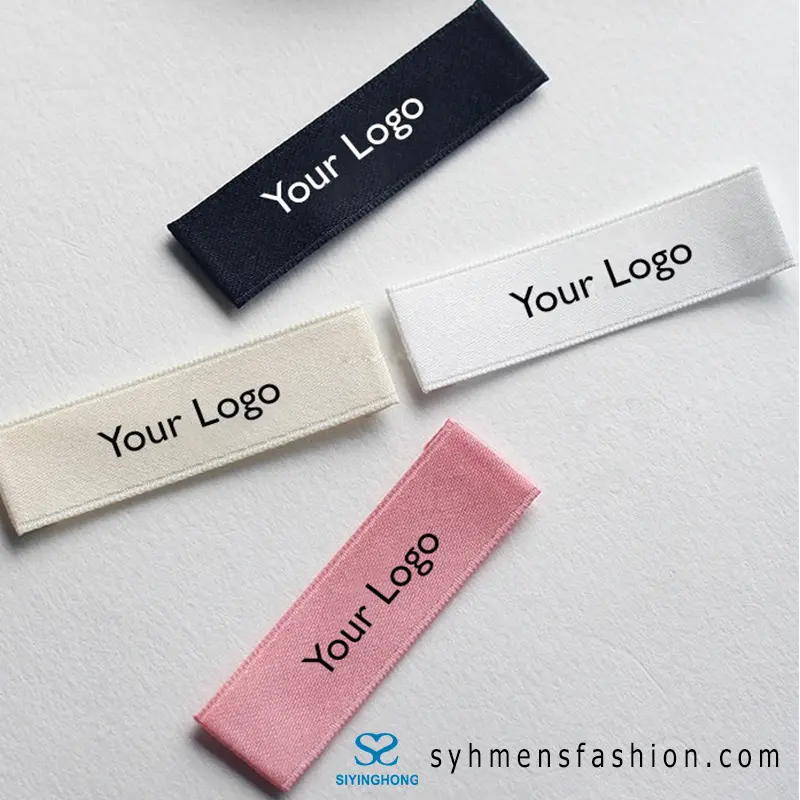
There are many types of labels. These include the brand label, origin label, size label and washing label, most, if not all, of which should be found on a garment. Many garments only have a single label which gives information about the brand, origin, size and care instructions. Labels are located indifferent parts of the garment according to both the type of label and the type of garment. Many labels, other than the brand labels, are sewn into a seam within a garment as part of the seaming operation a side seam is a typical example, this obviates the need for a separate label attaching operation.
As its name implies, the brand label will give the brand information for the garment. Since the
"status” of a garment, and hence the status of the wearer, would be reflected by the brand information, its method of manufacture is usually indicative of the brand status. For example, expensive and exclusive brands usually have jacquard woven labels and often appear prominently within the garment.
It must be noted that the registered brand names and trademarks are the intellectual properties of the owner. If a supplier wants to export garments in his own brand, he should find out beforehand whether the same brand has previously been registered in the destination country. If the brand is designated by the buyer, the supplier should ask the buyer to confirm before signing the contract whether the buyer is entitled to do so. If the supplier is not able to obtain such information, he should insist on inserting a clause regarding the responsibility of the buyer on the property rights , saying, for example, “if the brand labels and hangtags designated by the Buyers should infringe the intellectual property right of a third party, or cause any disputes, the Buyer shall be fully responsible for the consequences and settlements.
The origin label is usually printed to show the country of origin of the garment. In international trade, to give the correct origin information is very important, especially when there is any constraint on garment trade. The Customs and Excise Office of the importing country can determine , from the origin information , whether duties should be levied at a general rate or a special rate.
In China, garments before exportation are legally required to undergo a mandatory inspection of the labels and hangtags by a competent government authority to prevent illegal entrepot trade.
If there is no information regarding the country of origin on garments and packaging, this would be referred to as the “neutral packing". Many countries such as the United States , the United Kingdom, Germany and Japan etc. forbid the importation of neutrally packed goods and therefore , for garments exported to those countries , origin labels are essential.

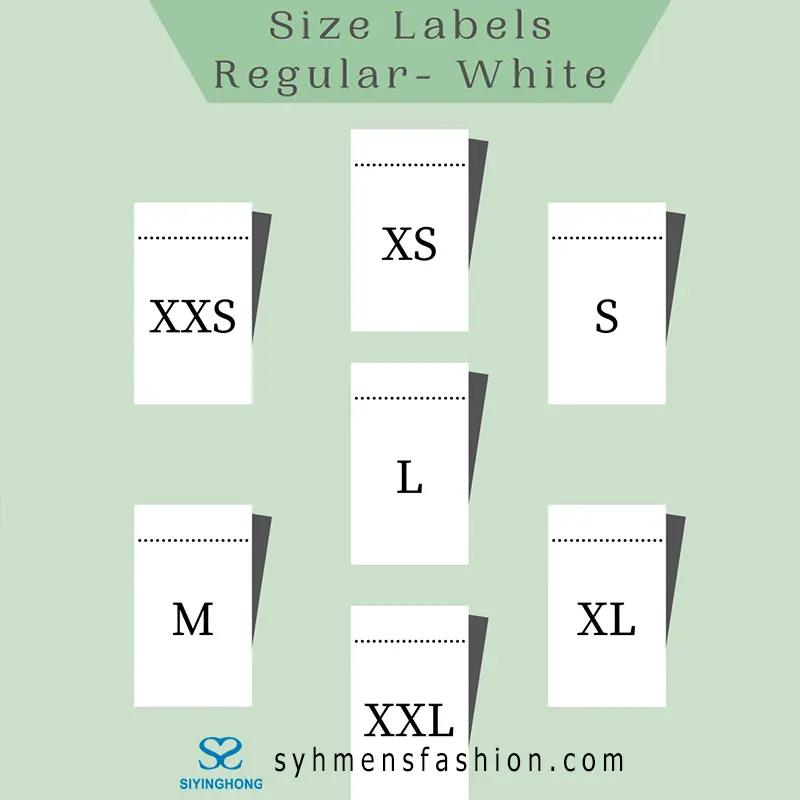
The size label is invariably printed. Clearly , the size information on the label is intended to enable the purchaser to choose the proper size of garment. For garments targeted at international travelers, so-called international size labels will be used which specifies the size used in the country where the market is located together with the corresponding equivalent sizes of other countries. Such a label greatly assists the traveller when choosing garments.
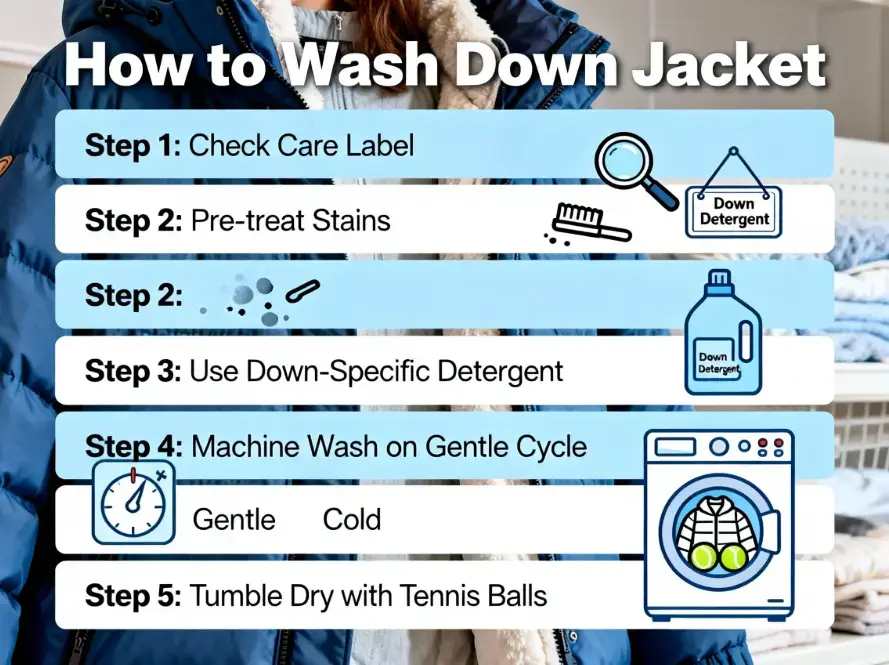
Washing labels, or care labels, give the instructions on how to take care of the garments. The
instructions are given in the form of some international textile care labeling codes as illustrated in fig. in below. Generally. five symbols will be used, that is, a wash tub, a triangle, an iron, and a square to indicate respectively the advice on the washing, bleaching, ironing, dry cleaning and drying process.
The care instructions are usually defined according to the composition of the shell fabrics; therefore many care labels would show the compositions of the shell and usually any lining as well. If there is a detachable lining, it may also need a separate care label since special instructions may be needed for that lining.
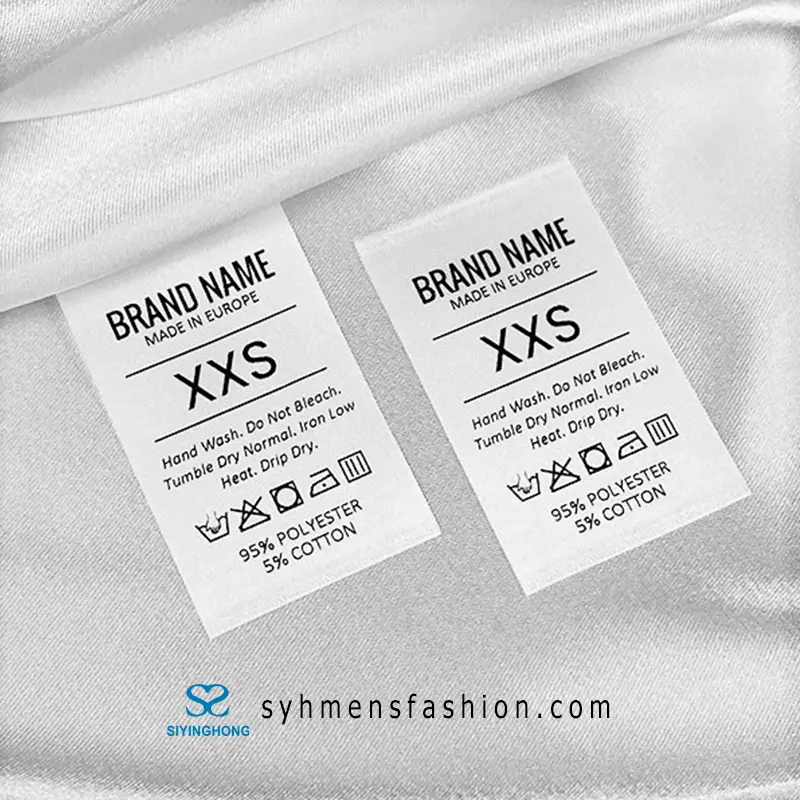
In addition to the labels giving the information on the brand, origin , size and care instructions labels offering some other information may also be used.
(1) Composition Label. Nowadays more and more people are concerned about the components used in the shell or lining. For the ordinary consumer, he or she will probably not be able to identify the components in a fabric from its appearance or the handle of the fabric. Therefore , unless such information has already been given on other labels, say the care label, a Composition label should be included.
(2) Warning Label. In some markets, garments, such as nightwear must have a permanent label showing whether or not they meet the flammability standard and giving a warning keep away from fire. For children's garments with small accessories, labels or hangtags showing a warning of a choking hazard may be required. Such warnings may appear on other labels, but sometimes a separate labels or hangtags is essential.
(3) Ecological Label. In many countries , especially developed countries , environmental issues are of increasing concern. Special regulations have been established and ecological labels are used for those garments that pass the accreditation on the ecology issues. There are many ecological labels, and the most famous one is probably the label of the Oeko-tex standard. At present, ecological labels are not mandatory; however garments with ecological labels would no doubt be received favourably in the international market.