


How to Find and Partner with the Right T-Shirt Factory
Introduction
For apparel brand entrepreneurs, offline retailers, and event planners, the question of "how to find and partner with the right T-shirt factory" is crucial for streamlining supply chains and enhancing product competitiveness. A high-quality T-shirt factory not only provides a stable supply and diverse customization options, but also reduces costs and shortens delivery cycles through professional collaboration. Choosing the wrong factory, however, can lead to risks such as inconsistent quality, delayed delivery, and inefficient communication. Dongguan Siyinghong Garment, with 15 years of experience in T-shirt production and a global service network, has provided over 200 brands with a one-stop partnership solution, from fabric selection and process customization to mass delivery. Whether you're a startup brand running a small trial run or an established retailer looking to replenish inventory in large quantities, they can find a suitable partnership model here. This article systematically addresses the question of "how to find and partner with the right T-shirt factory," covering aspects such as factory screening, partnership processes, customization support, quality assurance, and problem-solving, to help you efficiently connect with high-quality partners.
How to accurately select T-shirt factories that meet your needs?
When answering the question "How to Find and Partner with the Right T-Shirt Factory," "accurate screening" is the first and most crucial step. Many practitioners fail to clearly define the criteria for screening and blindly partner with partners, leading to various problems. Therefore, it is important to establish clear evaluation criteria based on your own needs.
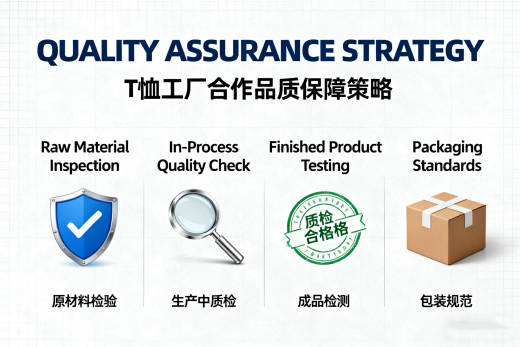
Dongguan Siyinghong Garment recommends screening T-Shirt Factories based on the following five core criteria to ensure a good fit:
1. Production Qualifications and Expertise: Prioritize factories with business licenses, clothing production licenses, and ISO 9001 quality certification. Also, consider their "dedicated T-shirt production"—for example, whether they have a dedicated T-shirt production line and have served clients in the same product category (such as sports brands or fast fashion brands). Avoid factories that offer a wide range of products, as their expertise directly impacts product quality.
2. Production Capacity and Delivery Flexibility: Based on your order size (e.g., a single trial order of 50 pieces, a bulk purchase of 5,000 pieces), confirm whether the factory's monthly production capacity matches your order size (e.g., a monthly production capacity of over 100,000 pieces can support large-scale orders). Also, inquire about their ability to respond to urgent orders (e.g., whether they can deliver 100,000 pieces within three days). (custom-made items) to avoid stockouts due to insufficient production capacity;
3. Fabric and Process Inventory: Identify the fabric types (e.g., combed cotton, organic cotton, polyester-cotton blends), weight range (180g-300g), and process options (screen printing, digital direct printing, embroidery, heat transfer) the factory can provide, and determine whether they align with the product positioning (e.g., high-end brands require organic cotton + embroidery, while promotional items require cost-effective polyester-cotton + screen printing).
4. Collaboration Cases and Reputation: Ask the factory to provide past collaborations (e.g., brand name, product images, order size), or learn about their reputation through industry platforms and customer reviews. Focus on whether they have long-term clients—stable, long-term relationships often reflect the reliability of the factory's service and quality.
5. Service Details and After-Sales Policy: Inquire whether the factory offers free sample production, dedicated customer service, and procedures for handling defective products (e.g., return and exchange timelines, restocking cycles). These details directly impact the customer experience. For example, free sample production can reduce trial and error costs, and dedicated customer service can reduce communication delays. Through a comprehensive assessment of the above dimensions, we can quickly eliminate unsuitable factories and identify "professional, reliable, and flexible" partners.
A comprehensive guide to partnering with T-shirt factories
A clear collaboration process ensures efficient coordination and is the core of "How to Find and Partner with the Right T-Shirt Factory." Many businesses struggle with back-and-forth communication and extended turnaround times due to a lack of understanding of the process. Standardized processes ensure smoother and more manageable collaboration.
Dongguan Siyinghong Garment has developed a six-step standardized collaboration process tailored to specific customer needs, covering every stage from demand communication to after-sales follow-up:
1. In-depth Demand Communication: Through the official website form, email, or video conference, clarify the core T-shirt requirements—including style (crew neck, V-neck, hooded), fabric specifications (composition, weight), process requirements (pattern placement, size, color), order quantity, delivery time, and any special requirements (such as eco-friendly dyes and children's T-shirt safety standards). The factory will also provide fabric and process samples for reference.
2. Sample Production and Confirmation: The factory will produce 2-3 T-shirts based on the requested pattern. A sample, labeled with fabric composition, process details, and a sizing chart, is shipped to the customer's designated address. Customers can perform wear and wash tests (to verify color fastness and pilling) and provide suggestions for modifications (such as adjusting pattern colors or optimizing neckline patterns). The factory will then make free modifications until the sample meets the standards.
3. Quotation and Contract Signing: After sample confirmation, the factory will provide a detailed quotation (including unit price, total cost, and payment method). Both parties will agree on delivery time, logistics methods, quality standards, and after-sales terms, and sign a formal cooperation contract to protect the rights and interests of both parties.
4. Pre-production Confirmation and Material Preparation: The factory will purchase raw materials (such as custom fabrics and printing inks) according to the contract. Upon completion, a "pre-production sample" (a sample consistent with mass production) will be sent to the customer. Upon confirmation, mass production will begin.
5. Production Progress Tracking: During the production process, the factory will synchronize real-time progress (such as fabric cutting completion, printing midway through, sewing completed) and key milestones (such as 10% and 50% of production) through a dedicated communication group. Provide photo or video feedback (in real time) to ensure customers are kept informed of production progress.
Finished Product Delivery and After-Sales Follow-up: After production is completed, the factory conducts a full inspection (checking pattern clarity, seam strength, and dimensional deviation). Once qualified, the product will be shipped according to the agreed logistics (international express, sea, and air freight are supported) and a tracking number will be provided. If the customer finds any defective product after delivery, they can provide photo proof within 7 days, and the factory will reissue it free of charge or credit the next payment.
Requirements document preparation tips
To improve communication efficiency, it is recommended to organize a "requirements list" in advance: mark the style reference picture (with a link to competing products), fabric weight and composition requirements, process details (such as pattern AI files, embroidery color Pantone color numbers), and order quantity split (such as S size 15%, M size 30%, L size 35%, XL size 20%) to avoid repeated sample modifications due to vague requirements.
The necessity of small batch trial production
When collaborating with a factory for the first time, it is recommended to choose a small batch trial production of 50-100 pieces. Through the trial production, you can verify the factory's quality control capabilities, process fidelity and delivery speed, and at the same time test market feedback (such as consumers' evaluation of the pattern and fabric). Then, gradually expand the scale of cooperation to reduce investment risks.
Optimal selection of logistics solutions
Based on the order volume and timeliness requirements, the factory can provide personalized logistics solutions: small batch orders (less than 100 pieces) can choose international express delivery such as DHL and FedEx (3-7 days delivery), large batch orders (more than 1,000 pieces) can choose sea transportation (low cost, 20-30 days delivery), urgent orders can be expedited by air transportation (5-10 days delivery), and we will assist with customs declaration and clearance procedures to ensure smooth delivery of goods.
Customized service docking in T-shirt factory cooperation
Customization is the core of T-shirt product differentiation and an essential element in "How to Find and Partner with the Right T-Shirt Factory." A high-quality T-shirt factory not only meets basic customization needs but also offers professional design optimization and process advice, helping customers create unique products.
Dongguan Siyinghong Garment offers three core services for customized designs, covering the entire design and production chain:
1. Process Customization and Adaptation Recommendations: We recommend the optimal process based on the complexity of the customer's design and order volume. For example, for complex color patterns (such as photo printing), we recommend digital direct printing (high fidelity, no minimum order quantity limit); for simple logos (such as monochrome text), we recommend screen printing (low cost, suitable for large quantities); and for embroidery, we enhance the brand's quality (such as chest logos on high-end T-shirts). We also provide process sample testing (such as testing the fading of the pattern after five washes) to ensure the customized effect meets expectations.
2. Fabric and Function Customization: In addition to conventional pure cotton and polyester-cotton fabrics, we support specialized fabric customization (such as organic cotton, bamboo fiber, sun-protective fabrics, and antibacterial fabrics) to meet specific needs. For example, sports T-shirts require breathable and quick-drying fabrics, children's T-shirts require Class A safety standard fabrics, and outdoor T-shirts require UPF50+ sun protection fabrics. We also adjust the fabric weight based on demand (e.g., 180g for summer T-shirts). Lightweight version available, 280g thicker version for winter);
3. Style and Detail Customization: Customizable necklines (crew, V-neck, Henley), cuffs (regular, ribbed, rolled), hems (straight, curved), and more. Customized details (such as custom collar and care labels, brand name or logo, and embroidered cuff numbers) can also be added to enhance brand recognition.
Customization cost and cycle control
The costs and lead times for different customization requirements vary significantly, and the factory will clarify this in advance. For example, custom fabrics cost 15%-30% more than standard fabrics and extend the lead time by 7-10 days. Complex processes (such as DTG + embroidery) cost 20% more than single processes and extend the lead time by 3-5 days. Customers can optimize their customization plans based on their budget and timeliness, with the factory's advice, to balance performance and cost.
Design copyright protection
To avoid copyright disputes, the factory will sign a "Design Copyright Confirmation" with the customer: the customer must ensure that the pattern and logo provided have legal copyright, or provide proof of authorization; the factory promises not to use the customer's customized design for other orders, and will destroy the relevant design files after the cooperation ends to protect the customer's intellectual property rights.
Core strategies to ensure quality in T-shirt factory cooperation
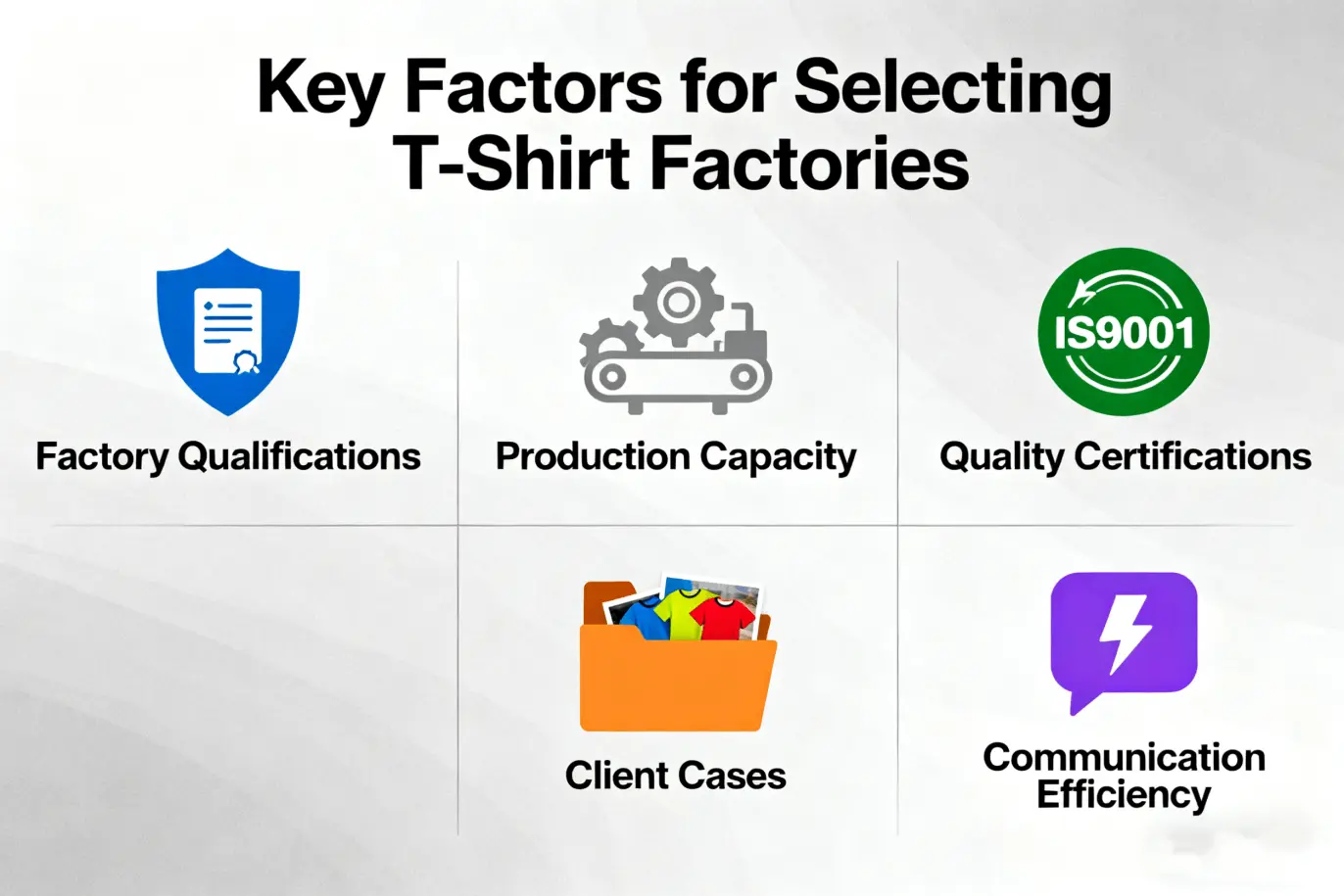
Quality is the foundation of long-term partnerships and a key consideration in "How to Find and Partner with the Right T-Shirt Factory." Inadequate quality control can lead to problems such as fabric pilling, pattern shedding, and sizing deviations, negatively impacting brand reputation. Dongguan Siyinghong Garment has established a four-level quality control system, ensuring every batch of T-shirts meets quality standards from source to finished product.
Strict screening of raw materials
- Fabrics and accessories are the foundation of quality. The factory conducts the following tests on every batch of raw materials:
- Fabric Testing: Professional equipment is used to test composition (e.g., whether it is 100% cotton, with a tolerance of no more than 3%), weight (deviation ≤ 5g/㎡), color fastness (wash fastness ≥ Level 4, rubbing fastness ≥ Level 3), and breaking strength (to prevent easy tearing). Unqualified fabrics are directly returned to the supplier.
- Accessories Testing: Accessories such as buttons, zippers, and thread must meet safety standards (e.g., buttons on children's T-shirts must have a pulling force of ≥ 70N to prevent them from falling off and being ingested). Printing inks and dyes must pass environmental testing (formaldehyde content ≤ 20ppm, in compliance with EU REACH standards).
Real-time monitoring of the production process
Dedicated personnel are assigned to conduct inspections during key stages, including cutting, sewing, and printing/embroidery:
- Cutting: Automated cutting equipment is used to ensure that each piece has a dimensional deviation of ≤1cm to prevent uneven cutting and resulting in inconsistent finished product patterns.
- Sewing: A stitch density of ≥8 stitches/3cm is required, with no skipped stitches, broken threads, or loose threads. High-wear areas such as collars and cuffs are double-sewn to enhance durability.
- Crafting: Printing is inspected for pattern position deviation (≤0.5cm) and color reproduction (color difference from sample ≤ΔE1.5). Embroidery is inspected for stitch density (no missed stitches or hooked threads) to ensure consistent craftsmanship.
Finished product full inspection and sampling testing
- After mass production is completed, the factory conducts a two-step quality verification process:
- Full Inspection: Following a "piece-by-piece" inspection, the finished product is inspected for appearance (no stains, loose threads, or holes), sizing (length and bust deviations ≤ 2cm), and workmanship (no loose patterns or embroidery). Defective products are individually marked and collectively destroyed or reworked.
- Sampling Testing: A 10% random sample is subjected to a wash test (simulating daily washing five times to check color fastness and pilling) and a stretch test (to check fabric elasticity and seam strength). Only qualified products are shipped.
Third-party testing support
If customers have export needs (such as the European, American, and Japanese markets), the factory can assist in contacting authoritative third-party testing agencies such as SGS and Intertek to conduct special testing (such as CPSIA child safety standards and OEKO-TEX® Standard 100 ecological textile certification) and provide test reports to ensure that the goods pass customs inspection in the importing country smoothly.
Practical solutions to common problems in T-shirt factory cooperation
In the practice of "How to Find and Partner with the Right T-Shirt Factory," it's inevitable that you'll encounter various problems. Understanding solutions in advance can reduce communication costs and ensure smooth collaboration. Dongguan Siyinghong Garment has compiled five common problems and solutions in collaboration:
What should I do if the order progress is delayed?
- If a delay occurs due to factory issues (such as raw material shortages or equipment failure), the factory will promptly notify the customer and provide remedial measures:
- Small-volume orders: Emergency production lines will be deployed to shorten delays (e.g., a delivery originally scheduled for 10 days will be completed within 7 days after the delay);
- Large-volume orders: Ship in batches, prioritizing delivery of some goods to avoid complete stockouts for the customer;
- Compensation: For delays exceeding 3 days, a 5%-10% discount on the order value will be provided, or a free process upgrade will be offered on the next order.
What should I do if I find defective goods after receiving them?
- Within 7 days of receiving the goods, customers can provide photos of defective products (marking the defective locations) and the quantity. After verification by the factory:
- Small defective products (≤3%): We will resend the corresponding number of finished products free of charge, with shipping covered by the factory;
- Large defective products (>3%): You can choose to return all products for rework (the factory will cover round-trip shipping costs), or negotiate a discount (e.g., a 10%-20% reduction in the purchase price based on the percentage of defects).
What should I do if I want to adjust the order requirements (such as increasing the quantity or modifying the process) after cooperation?
- If the order has not yet begun production, you can directly request adjustments, and the factory will recalculate the quote and lead time. If the order has already entered production:
- Pre-cutting adjustments: Only the difference in raw material prices needs to be compensated (e.g., increased fabric purchases due to increased quantity), and the lead time will be extended by 1-2 days.
- Post-cutting/in-process adjustments: The feasibility of the adjustment must be assessed (e.g., the pattern cannot be modified on a printed T-shirt). If adjustments are possible, the cost of the already produced portion plus the cost of the new order will be borne. The lead time will be extended by 3-5 days depending on the extent of the adjustment.
Can the payment method be adjusted flexibly?
- For regular partnerships, we offer a "30% down payment + 70% final payment (paid before shipment)" plan. Flexible plans are available for different customer types:
- Startup customers/small-volume orders: We offer a "50% down payment + 50% final payment (paid within 3 days of receipt)" plan, alleviating financial pressure.
- Long-term customers (three or more relationships with no negative records): We can apply for a "20% down payment + 80% final payment (paid within 7 days of receipt)" plan, or monthly settlement (orders placed in the current month will be settled the following month).
How to ensure price advantages in long-term cooperation?
- To support our customers' long-term growth, the factory offers tiered pricing discounts:
- Cumulative order volume reaches 5,000 pieces: Subsequent orders receive a 5% price reduction;
- Cumulative order volume reaches 10,000 pieces: Subsequent orders receive an 8% price reduction, and free design optimization services are provided;
- Annual Framework Agreement: Sign an annual procurement agreement (e.g., an agreed annual procurement volume of 20,000 pieces) to enjoy a year-round fixed base price and prioritize production and delivery.
Conclusion
Through this systematic analysis, I believe you've clearly grasped the core methodology of "How to Find and Partner with the Right T-Shirt Factory"—from the five criteria for precise factory screening, to the six-step standardized collaboration process, to customized service integration, a four-level quality control system, and solutions to common problems. Each step is centered around "matching needs, ensuring quality, and improving efficiency." As a professional T-shirt manufacturer, Dongguan Siyinghong Garment always prioritizes customer needs. Whether you're a startup brand seeking small-batch customization or an established merchant purchasing large quantities, you can find flexible, reliable, and cost-effective partnership solutions here. We look forward to becoming your long-term, stable supply chain partner through our professional production capabilities and meticulous service, helping your brand stand out in the T-shirt market.
FAQ
FAQ 1:Can I work with a T-shirt factory to customize it if I don't have the design files?
Yes. Dongguan Siyinghong Garment offers design assistance. Simply provide your initial ideas (e.g., logo text, pattern references), and our design team will create two or three free versions of your design. Once you're satisfied, we'll then proceed to the pattern making process.
FAQ 2:How to verify the production capacity of T-shirt factories?
In addition to checking qualifications and case studies, you can ask the factory to provide a "factory live video" or conduct a "video inspection" to gain a direct understanding of the production line, equipment, and quality inspection process. If the order volume is large (such as more than 1,000 pieces), the factory also welcomes customers to conduct on-site inspections (and can assist in arranging accommodation and reception).
FAQ 3:Can customized T-shirts be printed with my own brand collar label and care label?
Yes. We offer custom collar and care labels. Simply provide your collar label design (e.g., brand logo, size information), and we can create them using woven or printed labels. Costs vary depending on the material and quantity (e.g., woven labels cost 0.5-1 RMB per piece).
FAQ 4:Can you assist with customs declaration and clearance procedures for export orders?
Yes. Our factory has a professional foreign trade team that can assist in preparing commercial invoices, packing lists, customs declarations, and other documents. We also connect with our customs brokers and logistics providers to ensure smooth customs clearance in both the exporting and importing countries, eliminating the need for customers to handle these complex procedures themselves.