




How to identify the pros and cons of fabrics?
The difference between the pros and cons of fabrics
(1) The front pattern and color of the general fabric are all clearer and more beautiful than the reverse side. There is also something of the opposite.
(2) With a special view of the fabric and color pattern fabric, its front pattern must be clear and pleasing to the eye.
(3) convex and convex fabric: the front is close and delicate, with strip or pattern convex lines; while the back is rough, with a long floating line.
(4), wool fabric: single wool fabric, the plush side for the front. The double-sided fabric takes the smooth and neat side as the front of the fabric.
(5) Observe the cloth edge of the fabric. The smooth and neat side of the fabric is the front of the fabric.
(6), double-layer, multi-layer fabric: if the front and back longitude of the density is not at the same time, the front will generally have a larger density or the front raw material is better.
(7), gauze fabric: clear lines, the protruding side for the front.
(8) Towel fabric: the side of the wool density is the front.
(9) Print fabric: the pattern is clear and the bright color is the front.
(10), the whole piece of fabric: except for the export products, where the paste has the instruction manual (trademark) and covered with the factory inspection seal is generally on the reverse side. Most fabrics, the front and back of the obvious difference, but there are also many fabrics of the front and back are very similar, both sides can be applied, so this kind of fabric is not forced to distinguish the front and back of the difference.
The fabric is positive but smooth recognition
When customers choose clothing materials in the store, they often find that the front and back of some fabrics are not easy to distinguish; in the clothing store, it is easy to mistake the front and back of the fabric, so that the Garment Color is uneven, affecting the shape beauty. Therefore, it is very important to identify the front and back of the fabric for buying clothing materials and cutting and sewing. I to determine the front and back of the clothing material, generally can use the method of seeing and hand touch. Specifically grasp the following aspects:
(1) According to the pattern and color identification of the fabric identification. The front pattern of the fabric is clear, clean and delicate, and bright color; the reverse side is vague and dim, and the pattern lacks layers.
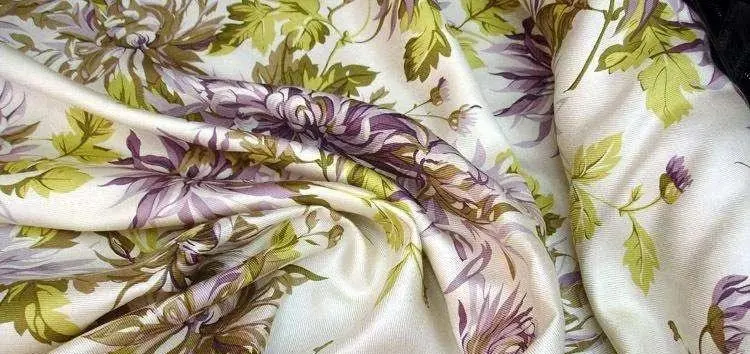
(2) According to the plush to identify. Lantern velvet, flat velvet, silky velvet are the front fluff back without fluff, relatively flat; for double-sided velvet fabric, the front wool is more and neat, the back is less fluff.
(3) According to the characteristics of the cloth edge identification. The cloth edge of general fabric, the front is flat, crisp, the reverse cloth edge to the inside curl. Some high-grade clothing fabrics, such as woolen material, have word codes or other words on the side of the cloth. At this time, the front of the fabric is clear, obvious and clean, while the reverse text is vague and reversed.
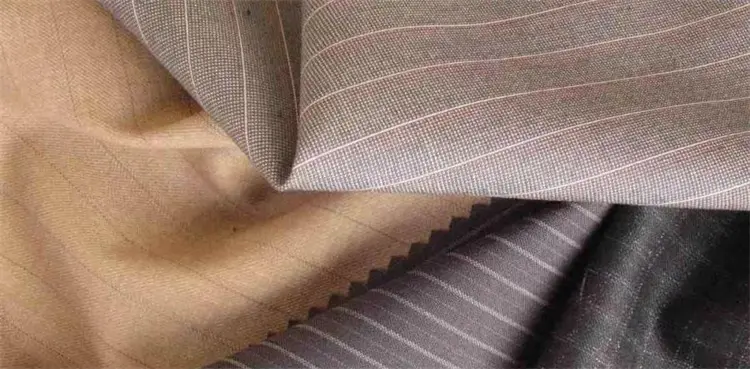
(4) Identification according to trademarks and seals. The whole fabric for domestic sales is generally affixed on the reverse trademark, product manual, and in each piece, each ends covered with the factory date and inspection seal. For export products, the trademark and seal cover will be affixed on the front of the fabric.
(5) Identification according to the packaging form. For packaged textile products, each cloth is the opposite. If there are two fabrics, the inside layer is the front, and the outside layer is the back.
In addition, also have individual fabrics, reverse decorative pattern is chic, color is downy. Therefore, when cutting and sewing, it can also be used as the front side of the fabric. The fabric of jacquard, strip lattice, the front stripe, grid and jacquard should be more obvious than the opposite side, layered, bright and uniform color. For flat, twill, satin clothing fabrics, the front lines is obvious, clear, and the cloth surface is smooth and smooth. In short, to identify the pros and cons of the fabric, we should consider many aspects to draw a correct conclusion.
Not all printed fabrics are inverted, but should be determined according to the specific pattern. Such as the complete pattern, portrait, cars and boats, towers, woods, etc., can not be reversed, otherwise it will affect the appearance effect.
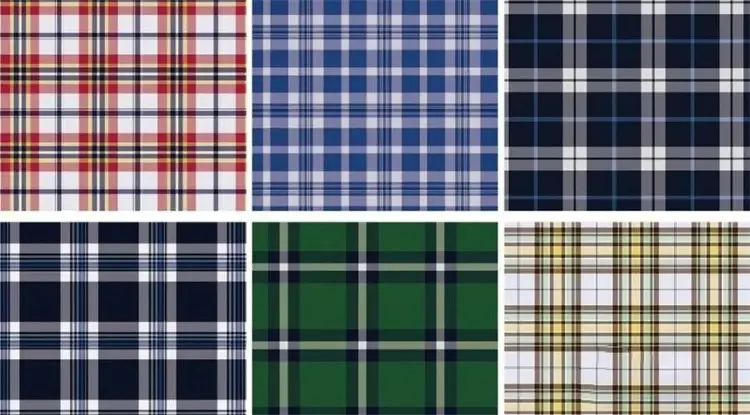
Grid left and right asymmetric fabric, called "Yin and Yang", the upper and lower asymmetric fabric is called "inverted". Attention should be paid to make the whole dress of the grid consistent, otherwise, the grid chaos, affect the appearance of the modeling effect.
Identify the reverse direction of fluff fabrics. Corduroy, canary velvet, flat velvet surface have a thick layer of fluff. The smooth color is light, bright luster, the cloth surface to feel smooth; the inverted color is dark, dark luster, hand touch feel rough. For fluff fabrics, we should pay special attention to the problem of inverted clothes, so that the fabric of the whole clothing is consistent. Otherwise, it will make the color in natural light shades, luster light and shade are different, the appearance effect is not good. Generally, it is better to take the reverse, if it is a flash fabric, also pay attention to the inverted fabric.
The fabric of the fabric
(1) If the identified fabric is trimmed, the yarn direction parallel to the edge is the direction, and the other side is the latitude.
(2), the pulp is the direction of the yarn, not the pulp is the direction of the weft.
(3), the general fabric density is the main, the density of the small side is the latitude.
(4) For the cloth with obvious reed marks, the direction of the reed is direction.
(5) For the half line fabric, usually the femoral direction is longitude, and the direction of single yarn is latitude.
(6) If the twist of single yarn fabric is different, Z twist is warp and S twist is latitude.
(7) If the special number, twist and twist of the fabric are not different, the yarn is evenly dry and better for the warp.
(8) If the twist of the yarn is different, the majority of the large twist is economic direction, and the small twist is latitude.
(9), towel fabric, the yarn direction of the coil is direction, not the coil is latitude.
(10), the strip fabric, the strip direction is usually in the direction direction.
(11) If the fabric has a system of yarn with many different special numbers, this direction is the direction.
(12), yarn fabric, the direction of the yarn with twisting is longitude, the direction of the yarn without twisting is latitude.
(13) In the interweaving of different raw materials, the general cotton wool or cotton and linen woven fabrics, cotton for warp yarn;In wool silk, silk is warp; while silk and cotton are warp; in natural silk and silk, natural silk is warp. Because the fabric is widely used, there are also many varieties, the fabric raw materials and tissue structure requirements are also diverse, so in the judgment, but also according to the specific situation of the fabric