


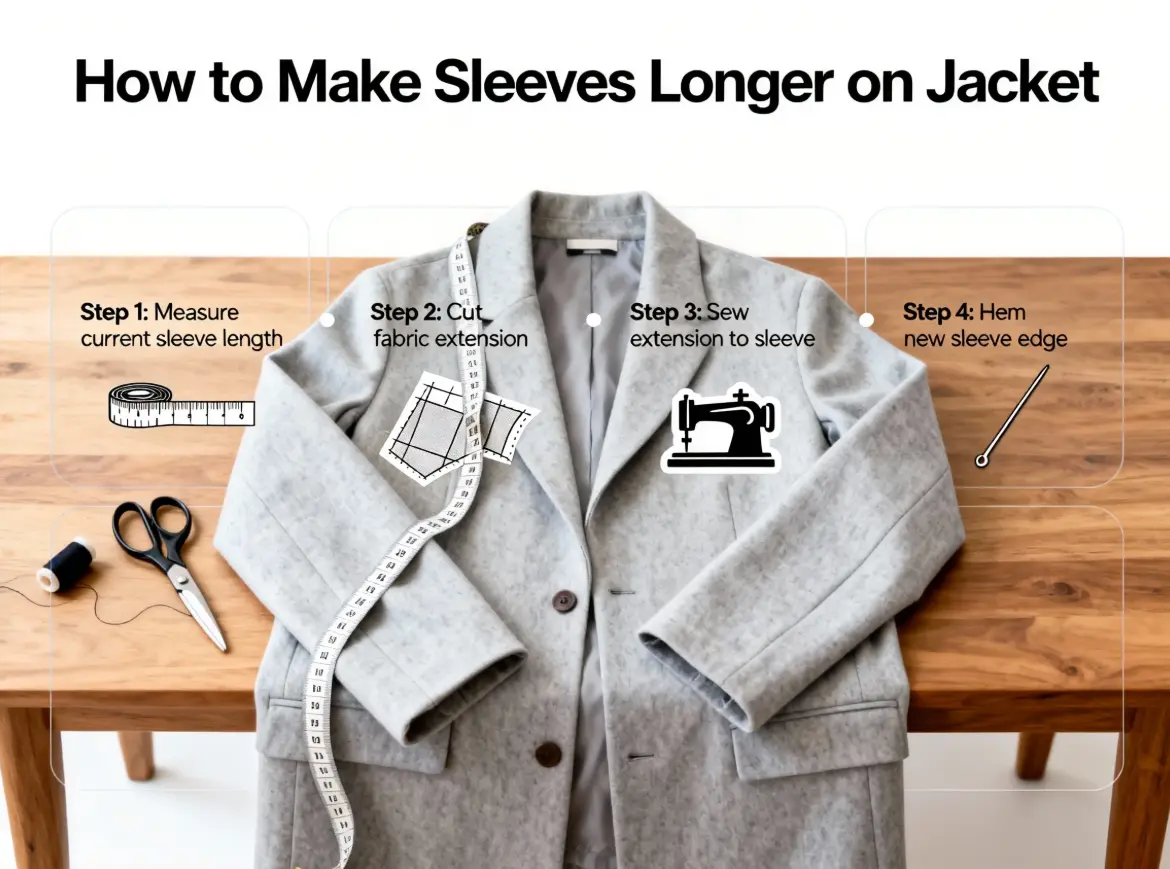
How to Make Sleeves Longer on Jacket
Introduction
A well-fitted jacket is a staple of stylish outfits, but short sleeves can ruin both the look and comfort—many people struggle with “how to make sleeves longer on jacket” after buying a favorite piece that’s slightly too small, or as a result of shrinkage after washing. Whether it’s a casual denim jacket, a formal blazer, a warm leather jacket, or a cozy knit jacket, short sleeves not only look awkward but also fail to provide proper coverage, especially in cooler weather. The good news is that making sleeves longer is achievable with the right methods, whether you choose a DIY approach for minor adjustments or rely on professional tailoring for more complex fixes. Dongguan Siyinghong Garment, with years of experience in Clothing Design and alteration, has helped countless customers resolve sleeve length issues. In this guide, we’ll break down “how to make sleeves longer on jacket” into actionable steps, covering feasibility checks, DIY techniques, professional modification processes, material-specific tips, and common pitfalls to avoid. By the end, you’ll have all the knowledge to extend your jacket sleeves and restore its perfect fit.
The complete process of professional revision
Before diving into “how to make sleeves longer on jacket,” it’s crucial to assess whether your jacket is suitable for sleeve extension. The feasibility depends largely on the jacket’s material, construction, and the amount of length you need to add. Rushing into modifications without this check may damage the jacket or result in a poor fit.
Core factors for feasibility assessment
- Amount of Length Needed: Minor adjustments (0.5-2 inches) are easy to achieve with DIY methods or simple tailoring. For longer extensions (2 inches or more), professional tailoring is recommended, as it requires more fabric and precise craftsmanship. If you need to add 3 inches or more, the feasibility depends on whether you can find matching fabric—without it, the extended part will look mismatched.
- Jacket Material: Natural fabrics like cotton, linen, and wool are easier to modify, as they can be sewn, unpicked, and blended with complementary fabrics. Synthetic fabrics like polyester or nylon may be trickier due to their fraying tendency and difficulty in bonding with other materials. Leather, suede, and knit jackets require specialized techniques (e.g., leather sewing machines, stretchy thread) and are best left to professionals.
- Jacket Construction: Jackets with lined sleeves (e.g., blazers, leather jackets) are more complex to modify, as the lining needs to be adjusted alongside the outer fabric. Unlined jackets (e.g., lightweight cotton jackets, denim jackets) are simpler for DIY projects. Jackets with decorative elements like zippers, buttons, or patches on the sleeves may require extra care to avoid damaging these details during modification.
- Fabric Reserves in Seams: Many jackets have extra fabric hidden in the sleeve seams (called “seam allowances”)—this is a common “secret” for minor length adjustments. Check the inner sleeve seam: if there’s 0.5-1 inch of unused fabric, you can simply let out the seam to extend the sleeves without adding new material.
A type of jacket with longer sleeves
- Casual Jackets: Denim jackets, cotton chore jackets, linen jackets—these are ideal for DIY modifications, as their simple construction and durable fabrics handle sewing and fabric additions well.
- Formal Blazers/Suits: While feasible, blazers require precise tailoring to maintain their structured shape. Minor extensions can be done by letting out seam allowances, while major adjustments need professional fabric matching and lining modification.
- Winter Jackets: Down jackets, wool coats—adding length may require handling insulation (e.g., down filling) or thick fabric, so professional help is advised to avoid compromising warmth or structure.
- Knit Jackets: Stretchy knit fabrics need stretchy thread and specialized stitching to prevent the extended part from being stiff or causing the sleeve to pucker.
3. Situations where modification is not recommended
- The jacket is severely faded or worn, and matching fabric is unavailable—adding new fabric will create a noticeable contrast.
- The sleeve has complex patterns (e.g., plaid, stripes) that are hard to align with new fabric, resulting in a messy look.
- The jacket is made of delicate materials (e.g., silk, thin suede) that are easily damaged during sewing or unpicking.
DIY 3 Practical Ways to Lengthen the Sleeve of a Jacket (No Professional Tools Required)
For minor sleeve length adjustments (0.5-2 inches) or jackets with simple construction, DIY methods are cost-effective and accessible. These techniques require only basic sewing tools (most of which you may already have at home) and no professional tailoring experience.
Method 1. Let Out Seam Allowances (No New Fabric Needed)
This is the easiest way to make sleeves longer if your jacket has extra fabric in the sleeve seams. It’s perfect for adjustments of 0.5-1 inch.
- Tools Needed: Seam ripper, fabric scissors, sewing machine (or needle and thread), iron.
- Steps:
- Turn the jacket inside out and locate the inner sleeve seam (the vertical seam running from the wrist to the armpit).
- Use the seam ripper to carefully unpick the stitching along the bottom 2-3 inches of the seam—be gentle to avoid cutting the fabric.
- Pull the sleeve gently to release the hidden fabric (the seam allowance). You should see 0.5-1 inch of extra fabric that was folded inside the seam.
- Iron the released fabric flat to remove creases.
- Sew a new seam along the edge of the extended fabric, using a straight stitch (if using a sewing machine) or a backstitch (if hand-sewing) for durability. Ensure the stitch is even and aligned with the original seam line to maintain the sleeve’s shape.
- Trim any excess fabric (leave a 0.3-inch seam allowance) and iron the new seam flat. Turn the jacket right side out—your sleeves are now longer!
Method 2. Add a Cuff Extension (Stylish & Functional)
If you need to add 1-2 inches of length, adding a matching or complementary cuff is a great option. It not only extends the sleeve but also adds a unique design touch.
- Tools Needed: Fabric (matching or contrasting with the jacket), fabric scissors, sewing machine, needle and thread, iron, measuring tape, pins.
- Steps:
- Measure the circumference of the jacket’s wrist opening—this will determine the width of your new cuff. Cut a strip of fabric that’s 2 inches longer than the wrist circumference (for overlap) and 3-4 inches wide (the width of the cuff, adjust based on how much length you want to add).
- Fold the fabric strip in half lengthwise (wrong sides together) and iron it flat—this will create the cuff’s thickness.
- Sew the two ends of the fabric strip together to form a circle, matching the wrist circumference. Iron the seam flat.
- Turn the jacket inside out and slide the new cuff over the end of the sleeve, aligning the raw edges (the bottom of the sleeve and the raw edge of the cuff). Pin the cuff in place, ensuring it’s evenly distributed around the sleeve.
- Sew a straight stitch along the pinned edge to attach the cuff to the sleeve. For extra durability, sew a second row of stitches 0.2 inches above the first.
- Turn the jacket right side out and fold the cuff down to cover the raw edges. Iron the cuff flat—you now have a longer sleeve with a stylish accent.
Method 3. Insert a Fabric Panel (For Longer Extensions)
For extensions of 2 inches or more, inserting a fabric panel between the sleeve and the cuff is the most effective DIY method. This works best for unlined jackets with simple sleeves.
- Tools Needed: Matching fabric (same material as the jacket, if possible), fabric scissors, sewing machine, needle and thread, measuring tape, pins, seam ripper.
- Steps:
- Turn the jacket inside out and use the seam ripper to unpick the stitching that attaches the cuff to the sleeve. Remove the cuff and set it aside.
- Measure how much length you want to add (e.g., 2.5 inches) and cut two rectangular fabric panels (one for each sleeve) that are equal to the sleeve’s width (at the wrist) and the desired length + 1 inch (for seam allowances).
- Pin one fabric panel to the bottom of the sleeve, right sides together, ensuring the edges are aligned. Sew a straight stitch along the edge, then iron the seam open.
- Pin the original cuff to the bottom of the fabric panel, right sides together, and sew a straight stitch to attach it. Iron the seam flat.
- Repeat the process for the other sleeve. Turn the jacket right side out—your sleeves are now extended by the desired length, and the panel blends seamlessly with the original sleeve.
The professional process for modifying the sleeves of a jacket and the guarantee of its effect
For complex jackets (e.g., lined blazers, leather jackets), large length extensions (3 inches or more), or if you lack DIY experience, professional tailoring is the safest and most effective way to answer “how to make sleeves longer on jacket.” Professional tailors have the tools, skills, and fabric resources to ensure the extended sleeves fit perfectly and look natural.
The complete process of professional revision
- Step 1: Consultation & Assessment: Bring your jacket to a reputable tailor and explain how much length you want to add. The tailor will examine the jacket’s material, construction, and seam allowances to determine the best modification method. They may also suggest fabric options if new material is needed (e.g., matching leather for a leather jacket, complementary wool for a blazer).
- Step 2: Fabric Selection & Matching: If the jacket has no extra seam allowance, the tailor will help you find matching fabric. For patterned jackets (e.g., plaid, stripes), they’ll ensure the pattern aligns with the original sleeve to maintain a cohesive look. For leather or suede jackets, they’ll use specialized leather patches or extensions that match the texture and color of the original material.
- Step 3: Fitting & Marking: The tailor will have you try on the jacket to mark the desired sleeve length. They’ll also adjust for fit around the wrist and armhole to ensure the extended sleeve doesn’t feel tight or restrict movement.
- Step 4: Modification & Sewing: For lined jackets, the tailor will first remove the lining, modify the outer sleeve (either by letting out seams, adding fabric panels, or extending the cuff), then adjust the lining to match the new sleeve length. They’ll use specialized techniques for different materials—e.g., leather sewing machines for leather jackets, stretchy thread for knit jackets—to ensure durability and a clean finish.
- Step 5: Final Fitting & Adjustments: Once the modification is complete, you’ll try on the jacket again to check the sleeve length, fit, and overall appearance. The tailor will make any final tweaks (e.g., adjusting the cuff tightness, ironing out creases) to ensure perfection.
The advantages and guarantee of the professional modification process
- Perfect Fabric Matching: Tailors have access to a wide range of fabrics and can source materials that match the jacket’s color, texture, and pattern—something that’s hard to achieve with DIY.
- Precise Construction: Professional tailors ensure the extended sleeve maintains the jacket’s original shape and structure. For example, blazers will retain their structured shoulder and armhole fit, while leather jackets will have smooth, seamless extensions.
- Lining Alignment: For lined jackets, tailors adjust the lining to match the new sleeve length, preventing the lining from being too short or bunching up inside the sleeve.
- Durability: Tailors use high-quality thread and specialized stitching techniques (e.g., lockstitch for cotton, leather stitching for leather) to ensure the modified sleeve withstands regular wear and washing.
- How to Choose a Reliable Tailor
- Look for Specialization: Choose a tailor who specializes in jacket alterations, especially if you have a leather, suede, or formal blazer. Ask to see examples of their previous sleeve extension work.
- Check Reviews & Recommendations: Read online reviews or ask friends/family for referrals. A reputable tailor will have positive feedback about their craftsmanship and customer service.
- Confirm Pricing & Turnaround Time: Get a detailed quote before proceeding—prices vary based on the jacket’s material, the amount of length added, and the complexity of the modification. Ask about the turnaround time (most jacket sleeve extensions take 3-7 days).
- Discuss Guarantees: Ensure the tailor offers a guarantee—e.g., if the fit is not right, they’ll make adjustments for free. This gives you peace of mind and ensures you’re satisfied with the result.
The method for making sleeves longer varies significantly by jacket material—what works for a cotton jacket may damage a leather or knit jacket. Understanding material-specific techniques is key to answering “how to make sleeves longer on jacket” without ruining your garment.
(Cotton/Linen Jackets)
- Key Characteristics: Durable, easy to sew, and prone to minimal fraying (especially if finished with serging). Ideal for DIY modifications.
- Recommended Methods: Letting out seam allowances (for minor adjustments), adding fabric panels, or cuff extensions.
- Tips:
- Use 100% cotton thread for sewing—this matches the fabric’s texture and ensures durability.
- Pre-wash any new fabric before adding it to the jacket to prevent shrinkage later.
- Iron the seams flat after sewing to give the sleeve a professional finish.
Leather/Faux Leather Jackets)
- Key Characteristics: Delicate, non-fraying, and requires specialized tools (e.g., leather needles, heavy-duty thread). DIY modifications are risky—professional tailoring is recommended.
- Recommended Methods: Professional fabric extension (using matching leather patches) or cuff replacement (adding a longer leather cuff).
- Tips:
- Never use a regular sewing machine on leather—leather needles are sharp and designed to pierce the material without tearing it.
- Avoid using pins on leather (they leave permanent holes)—use leather clips or double-sided tape to hold fabric in place.
- After modification, apply leather conditioner to the extended area to keep the leather soft and prevent cracking.
(Knit/Stretchy Jackets)
- Key Characteristics: Stretchy, prone to unraveling, and requires stretchy thread to maintain flexibility.
- Recommended Methods: Adding a stretchy cuff extension or inserting a knit fabric panel.
- Tips:
- Use a ballpoint needle (for knit fabrics) and stretchy thread (e.g., polyester thread with spandex) to avoid breaking the fabric’s fibers.
- Sew with a zigzag stitch instead of a straight stitch—this allows the seam to stretch with the fabric.
- When cutting knit fabric, use sharp fabric scissors and avoid pulling the edges (this causes unraveling). Finish the raw edges with a serger or a zigzag stitch.
(Wool/Tweed Jackets)
- Key Characteristics: Thick, structured, and prone to fraying. Often lined, so modifications require adjusting both the outer fabric and the lining.
- Recommended Methods: Professional tailoring (for lined jackets) or DIY seam allowance release (for unlined jackets).
- Tips:
- Use wool-specific thread (thick and durable) to match the fabric’s weight.
- If adding a fabric panel, choose wool or a wool blend to maintain the jacket’s warmth and structure.
- Iron the seams with a steam iron (on the wool setting) to flatten them—avoid pressing too hard, as wool can develop shiny marks.
Common Mistakes and Tips for Avoiding Pitfalls When Lengthening Jacket Sleeves
Many people make mistakes when trying to make sleeves longer, resulting in damaged jackets, poor fit, or unappealing results. Avoiding these common pitfalls is crucial to ensuring your modification is successful.
Using the Wrong Thread or Needle
- Problem: Using regular thread on stretchy or leather jackets causes the thread to break, and using a regular needle on leather or knit fabric tears the material.
- Solution: Match the thread and needle to the jacket’s material: use stretchy thread and ballpoint needles for knits, leather thread and leather needles for leather, and cotton thread and universal needles for cotton/linen.
Adding Mismatched Fabric
- Problem: Using fabric that doesn’t match the jacket’s color, texture, or pattern creates a noticeable, unprofessional look.
- Solution: For DIY projects, try to find fabric that’s identical to the jacket (e.g., leftover fabric from the jacket’s hem, or fabric from a similar old jacket). For professional modifications, trust the tailor to source matching fabric.
Overlooking the Lining
- Problem: Extending the outer sleeve without adjusting the lining results in a lining that’s too short, causing bunching and discomfort.
- Solution: For lined jackets, always adjust the lining to match the new sleeve length. If you’re DIYing, unpick the lining from the sleeve, extend the outer fabric, then trim and reattach the lining. For complex lined jackets, leave this to a professional.
Rushing the Sewing Process
- Problem: Sewing quickly or unevenly leads to crooked seams, loose stitches, and a messy finish.
- Solution: Take your time—pin the fabric carefully before sewing, and sew in straight, even stitches. If hand-sewing, use small, tight stitches for durability. For DIY projects, practice on scrap fabric first to get a feel for the material and thread.
Ignoring the Jacket’s Overall Fit
- Problem: Extending the sleeves without checking the armhole or shoulder fit can result in sleeves that are long but tight or restrictive.
- Solution: When trying on the jacket after modification, ensure the sleeves move freely and the armhole doesn’t dig into your armpit. If the jacket is too tight around the arms, a sleeve extension may not fix the issue—consider having the jacket let out at the sides as well.
Using Heat on Delicate Materials
- Problem: Ironing leather, suede, or delicate knits with high heat causes damage (e.g., leather cracking, suede melting, knits stretching out of shape).
- Solution: Use the appropriate heat setting for the material—low heat for leather/suede, medium heat for knits, and steam for cotton/wool. For leather and suede, place a cloth between the iron and the fabric to protect it.
Conclusion
Whether you’re dealing with a favorite jacket that’s slightly too short or a thrifted find that needs a fit adjustment, “how to make sleeves longer on jacket” is a solvable problem with the right methods. For minor adjustments (0.5-1 inch) and simple jackets (cotton, unlined), DIY techniques like letting out seam allowances or adding a cuff extension are cost-effective and easy to execute. For complex jackets (lined blazers, leather), large extensions (2 inches or more), or delicate materials (knit, suede), professional tailoring is the safest choice to ensure a perfect fit and natural look. Remember to always assess the jacket’s feasibility first, match the thread and fabric to the material, and avoid common pitfalls like mismatched fabric or ignoring the lining. With the tips in this guide, you can extend your jacket sleeves and enjoy a well-fitted garment for years to come.
FAQ
FAQ 1: How much does it cost to have a tailor make jacket sleeves longer?
The cost varies based on the jacket’s material, complexity, and the amount of length added. For simple cotton jackets with minor adjustments, expect to pay 15-30. For lined blazers or leather jackets, prices range from 30-80. Large extensions (2 inches or more) may cost 50-100, depending on fabric matching needs.
FAQ 2: Can I make sleeves longer without sewing?
For very minor adjustments (0.5 inches or less), you can use fabric glue to attach a cuff extension, but this is a temporary fix and not as durable as sewing. Fabric glue works best for lightweight, non-stretchy fabrics (e.g., cotton) and should be avoided for leather, knit, or heavy materials. For a permanent solution, sewing or professional tailoring is recommended.
FAQ 3: What if my jacket has no extra fabric in the seams?
If there’s no seam allowance to let out, you’ll need to add new fabric (either via a cuff extension, fabric panel, or professional modification). For DIY projects, try to find fabric that matches the jacket’s color and texture. For professional work, the tailor will source matching fabric or suggest a complementary option that blends well.
FAQ 4: Will making sleeves longer ruin the jacket’s resale value?
If done properly (either by a professional tailor or with neat DIY work), sleeve extension won’t significantly impact resale value—especially if the modification is subtle and the fabric matches well. Poorly executed modifications (mismatched fabric, crooked seams, damaged material) will lower resale value, so it’s worth investing in quality work.